Centre-Based vs. Home-Based Care: Which is Right for Your Family?
Home-based ECE vs Centre-based Childcare: Choosing the Best Early Learning for Your Child
Key Takeaways
- Centre-based services are the primary choice for the majority of New Zealand families.
- Home-based care offers a smaller, more intimate group setting within a residential environment.
- Quality outcomes for children depend on actual teacher-to-child ratios and staff stability.
- Purpose-built centres provide expansive outdoor spaces and age-specific learning environments.
- Choosing the right model requires balancing your child’s temperament with your family’s daily rhythm.
Deciding on the right early childhood education (ECE) for your child is one of the most significant choices you will make as a parent. In our experience, families in Havelock North and the wider Hawke’s Bay region often find themselves weighing up two distinct paths: the intimate, small-group setting of home-based care or the social, resource-rich environment of a purpose-built centre. Both models are part of a regulated system designed to support the development of our tamariki (children), but they offer very different daily experiences.
Most families in Aotearoa currently lean towards the centre-based model. According to the Ministry of Education’s 2025 ECE Census, 72% of children attending a licensed early learning service were in an education and care centre. This preference is even more pronounced as children grow older, with 89% of four-year-olds in the estimated population attending a service during the census week. While home-based care remains a valued part of the sector, the structured social opportunities and expansive facilities of centres continue to meet the needs of the majority. When you are choosing the right childcare in Havelock North, understanding these statistics helps ground your decision in the current landscape of New Zealand education.
What is a home-based educator?
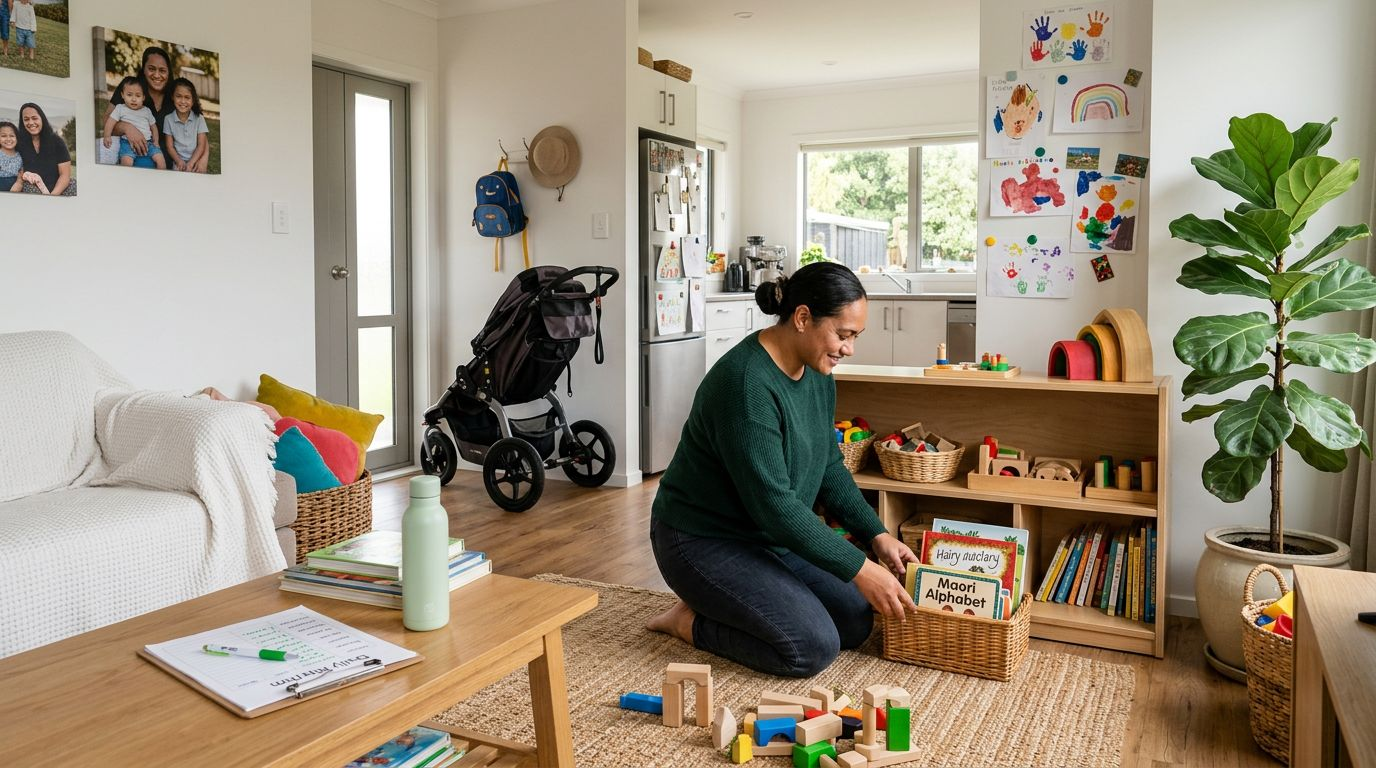
A home-based educator is a person who provides care and education for a small group of children within a home environment. This model focuses on a "home away from home" feel, where the educator’s own house serves as the primary learning space. Licensed home-based care allows a maximum of four children under six per educator, with no more than two children under the age of two at any time. This small group size can be a great fit for infants or children who thrive in quieter, more predictable settings.
Home-based care often involves the educator taking children on an outing to a local park, library, or playgroup to socialise. Because the group is so small, the educator can follow the individual rhythms of each child closely. However, the quality of this experience relies heavily on the individual educator’s skills and the support they receive from their parent organisation. While 80% of home-based educators are qualified, this includes a mix of specific home-based qualifications and ECE or primary teaching degrees.
How does a centre-based ECE service operate?
A centre-based ECE service operates in a purpose-built or specifically adapted facility designed to cater to larger groups of children, often divided into age-specific rooms. These centres employ a team of qualified teachers and provide a wide range of resources, from art studios to expansive outdoor playgrounds. For many parents, the primary draw of a centre is the opportunity for their child to socialise with a diverse group of peers and experience a broad curriculum.
We have seen that a high-quality centre can offer advantages that are difficult to replicate in a home setting. For example, our unique Cherry Grove environment features over an acre and a half of wide-open land made for playing and exploring. Having this much space allows children to engage in large-scale physical play and nature-based discovery every day. Centres also provide a sense of stability, if one teacher is unwell, the centre remains open and the child is cared for by other familiar members of the teaching team.
Supervision and Ratios: Comparing the Models
Legal minimum ratios in New Zealand set the baseline for safety, but they vary significantly between the two models. For teacher-led centre-based ECE, the legal minimum ratios are 1:5 for children under two and 1:10 for children aged two and over. In contrast, home-based care is capped at 1:4. While the home-based ratio looks better on paper for older children, it is important to look at the "effective ratio" in a centre. Many quality centres choose to staff above these minimums, particularly for infants, where a 1:3 or 1:4 ratio is often the goal for best practice.
We recommend parents ask potential providers about their actual staffing levels rather than just the legal minimums. You should ask how many qualified teachers are on the floor at any given time and how they manage ratios during staff breaks. In a centre, a large teaching staff provides a collective pool of knowledge and support, ensuring that children are always supervised by multiple adults who can collaborate on learning programmes and safety.
Understanding Quality and Due Diligence
Quality varies across all types of childcare, making it essential for parents to look past marketing and observe the daily reality of a service. A 2023 survey by the Office of Early Childhood Education (OECE) highlighted some of the challenges within the sector. The survey found that 26% of surveyed teachers would not enrol their own child at their current service or one of comparable quality. Furthermore, 45.5% of teachers in education and care centres reported breaches of minimum adult-to-child ratios at least rarely.
These figures emphasize why visiting a service in person is vital. Whether you are looking at a home-based educator or a centre, watch how the adults interact with the children. Do they have time for individual conversations? Do the children seem settled and engaged? A quality service will have a clear, values-driven approach to teaching and a stable team that understands each child’s unique needs. Participation in ECE is almost universal for four-year-olds in New Zealand because high-quality ECE is linked to better developmental and school-readiness outcomes. The key word here is quality.
Relationships and the Philosophy of Whanaungatanga
Building strong relationships is the foundation of any successful early learning experience. In New Zealand, we call this whanaungatanga, which refers to the process of establishing relationships and a sense of belonging. A centre-based model often excels here by creating a community of families. At Cherry Grove, we focus on close relationships with families as the basis for celebrating children’s outcomes. This commitment is a core part of our childcare philosophy, which views children as competent, independent learners.
While a home-based educator offers a deep connection with one person, a centre offers a network of support. This includes age-specific rooms where children can transition through different developmental stages, such as our Seeds nursery for infants through to our Honey Bees room for those preparing for school. This structure allows children to socialise with peers at the same developmental level while still being part of a larger, nurturing community.
What about cost and subsidies?
Costs for childcare in Hawke’s Bay can vary depending on the age of your child, the hours they attend, and the specific inclusions of the service. New Zealand families have access to several forms of government support, including the 20 Hours ECE subsidy for three, four, and five-year-olds, and WINZ Childcare Subsidies for eligible families. Understanding these options is a crucial part of the decision-making process.
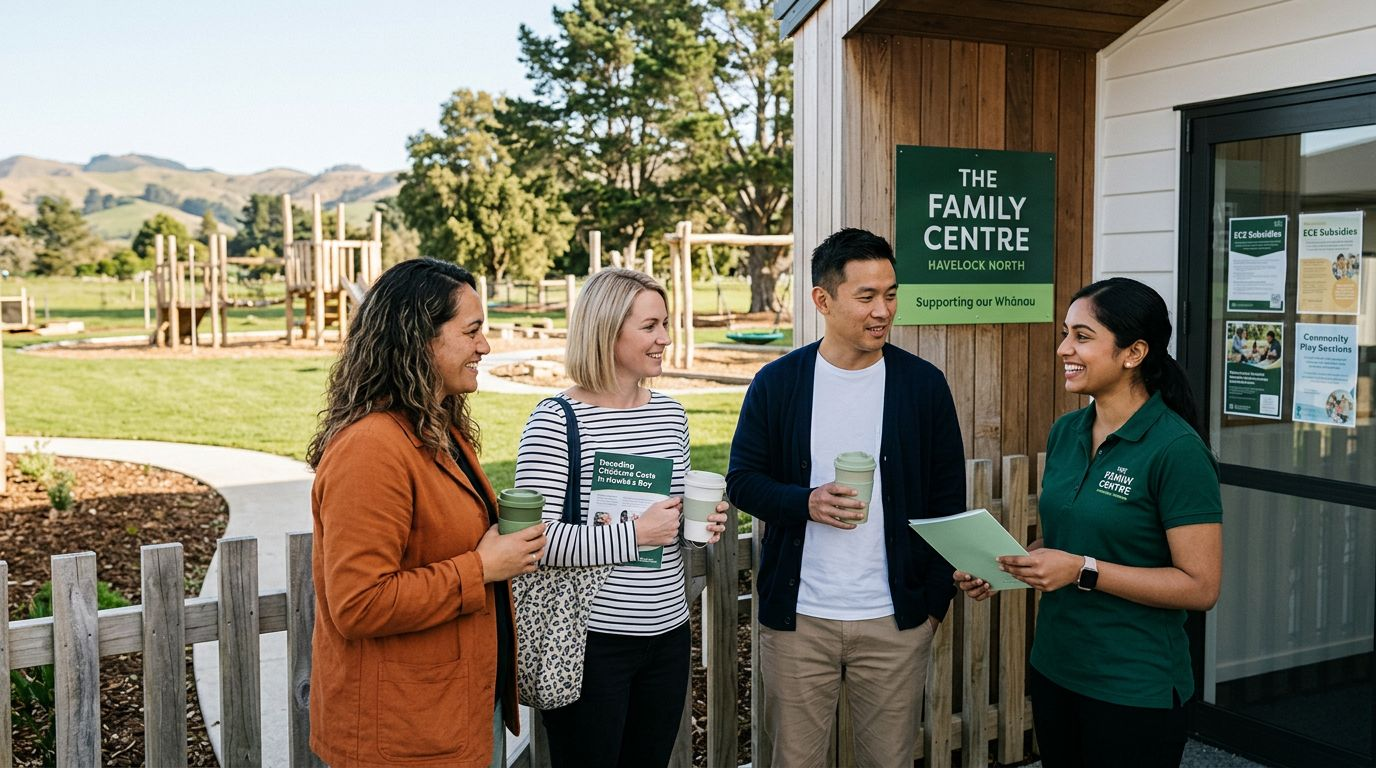
We believe in being straightforward with families about financial commitments. If you are currently navigating the financial side of this decision, our guide on decoding childcare costs in Hawke’s Bay provides a detailed breakdown of how subsidies work and what you can expect. We also offer a free on-site Family Centre for parents with children from birth to five years old, providing a space to connect and play without the pressure of formal enrolment fees. Whether you choose the intimate setting of a home-based educator or the expansive opportunities of a purpose-built centre, the goal remains the same: ensuring your child has a safe, nurturing space to learn and grow.