
The Power of the Playground: How Outdoor Learning Shapes Young Minds
Early Childhood Education: The Power of Nature-Based Play
Key Takeaways
- Nature-based play serves as a primary driver for cognitive, physical, and social-emotional development in children aged 0 to 6.
- Access to expansive green spaces during early childhood correlates with improved mental health and physical wellbeing into the teenage years.
- Managed risky play enables tamariki to build essential risk-assessment skills and resilience while reducing the likelihood of future anxiety.
- High-quality outdoor environments provide more complex opportunities for imaginative and cooperative learning than traditional manufactured playgrounds.
Choosing the right early childhood education (ECE) path for your child involves looking beyond the four walls of a classroom. In our experience, the environment where a child spends their day acts as the third teacher, shaping how they interact with the world and their peers. While modern life often pushes tamariki toward screens and structured indoor activities, the natural world remains the most potent laboratory for learning.
We see outdoor play as a fundamental requirement for healthy growth rather than a simple break from learning. Research from The Education Hub confirms that outdoor play correlates with higher physical activity levels, which are linked to vital health benefits including physical fitness, metabolic function, and bone health. Conversely, a lack of access to these spaces contributes to increased levels of depression and obesity in children. By providing wide-open spaces, we help families prioritise the long-term health of their children from the very start of their educational journey.
Why Early Outdoor Play Shapes Life-Long Outcomes
The benefits of playing under the sun and among the trees extend far beyond the preschool years. We often talk to parents about the long-term investment they are making when they choose a nature-rich environment. A longitudinal study of nearly 5,000 children found that access to green space from ages 4 to 5 was positively associated with better mental health and health-related quality of life at ages 14 to 15. This research highlights that prosocial behaviour, such as sharing and helping others, acts as a key pathway between early nature contact and adolescent wellbeing.
At our centre, we see this play out daily. Our tamariki develop a deep sense of belonging and social competence as they navigate shared spaces. You can learn more about how we facilitate these experiences by exploring our unique, acre-and-a-half outdoor environment in Havelock North, which is specifically designed to foster these lifelong developmental pathways.
The Role of Managed Risk in Children’s Development
It is natural for parents to feel protective, but allowing children to experience managed risk is essential for their confidence. We define risky play as thrilling and exciting forms of physical play that involve uncertainty and the potential for a tumble. Research indicates that children from ages 1 to 6 regularly engage in risky play at a level suited to their competence, and these experiences are positively associated with better risk management skills.
When we restrict these movements too heavily, we risk creating boring playgrounds that fail to challenge a child’s growing mind. Curbing this autonomy may actually increase the likelihood of anxiety in childhood and into adulthood. In our experience, when a child learns to climb a hill or balance on a log, they are learning how to assess their own limits. This hands-on approach to learning is supported by a New Zealand case study on unstructured bush explorer activities, which found that such outdoor education experiences have a significant effect on the later stages of adulthood.
Building a Foundation for School Readiness
Many whānau ask us how outdoor play relates to traditional academic success. The connection is stronger than you might think. High-quality natural environments with trees and hills are associated with improved attention and inhibitory control. This means that after a session of big body play outdoors, children are often better able to focus on classroom activities that require concentration. This is a core part of our early childhood teaching philosophy.
We focus on preparing children for the next step in their journey through our dedicated transition to school programme. Statistics show that children who are kindergarten ready have an 82 percent chance of mastering basic skills by age 11. We use our park-like grounds to build the resilience and problem-solving skills necessary for this transition. You can read more about how outdoor-rich kindergarten prepares children for school and life on our dedicated blog.
The Cherry Grove Difference in Havelock North
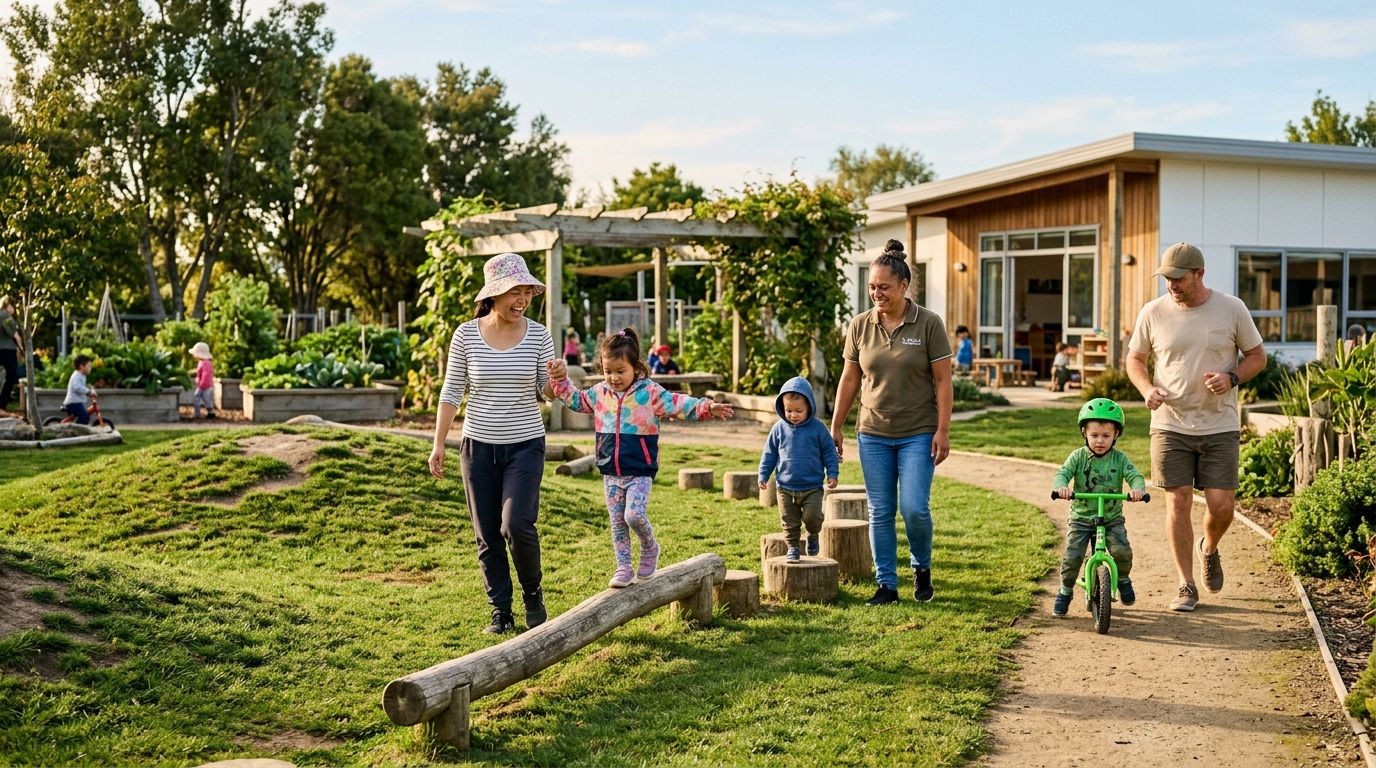
Our centre is set on over an acre and a half of wide-open land made for playing and exploring. We believe that early childhood education should feel like a second home, which is why we have eight age-and-stage rooms to ensure small groups and individualised care. From our nursery rooms like Seeds and Sprouts to our senior rooms, every child has the freedom and space to run, ride bikes, and climb hills in our large park-like outdoors environment.
For our oldest tamariki, our dedicated Honey Bees transition to school room in Havelock North provides a bridge between the play-based world of ECE and the structured environment of primary school. Here, we weave Te Whāriki, the New Zealand early childhood curriculum, into every outdoor adventure. Whether they are building a fort or investigating insects, they are developing the early literacy and numeracy skills that will serve them for years to come.
Supporting the Whole Whānau
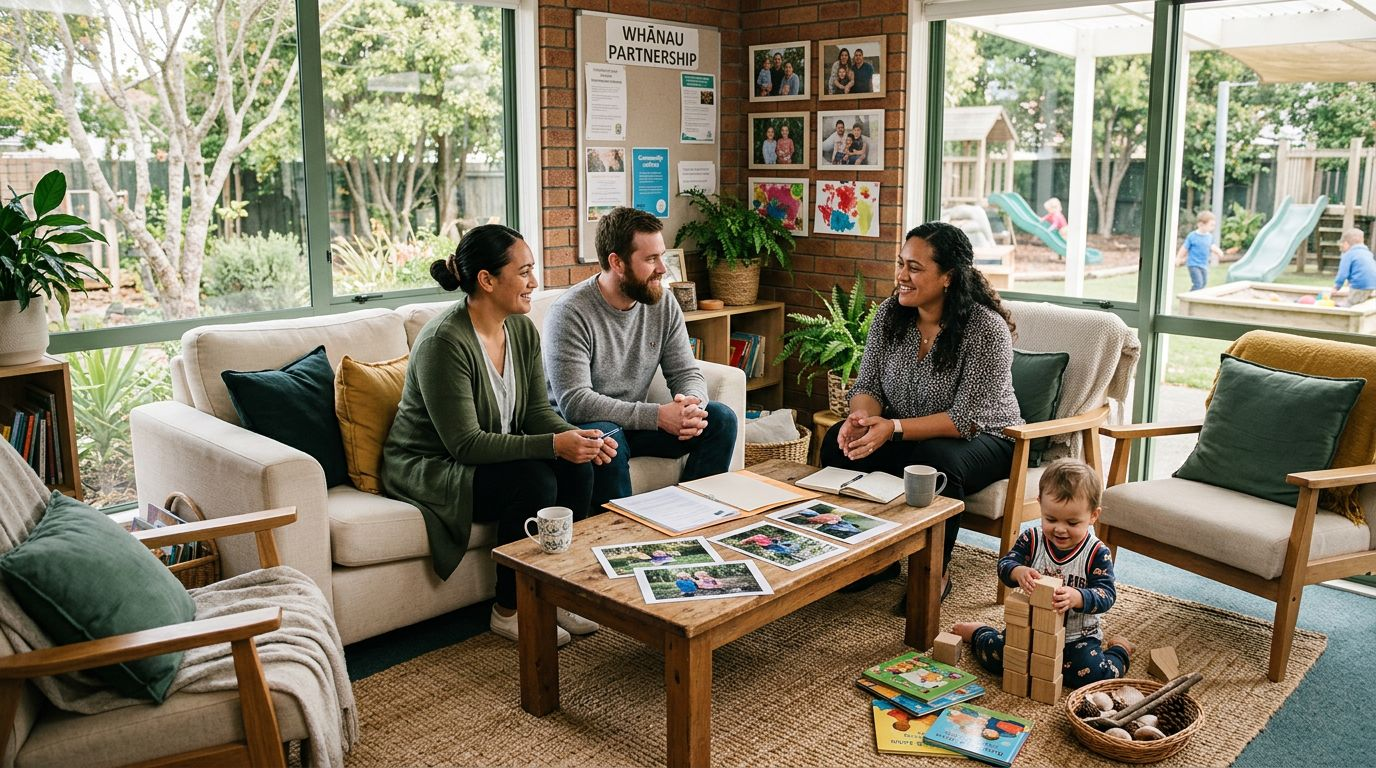
We know that a child’s education is a partnership between the centre and the home. Our unique layout includes a dedicated Family Centre, a space where parents can learn and play alongside their children. This helps bridge the gap between home and the centre, ensuring that the benefits of nature-based play and our education programme are understood and supported by the whole family. Costs for ECE services can vary depending on your child's age and the hours required, and we are always happy to discuss study options or how our qualification-led teaching staff support your child's specific needs.
By choosing an environment that prioritises the outdoors, you are giving your child the space to grow into a confident, curious, and resilient learner. In the Hawke’s Bay, we are lucky to have the space to make this a reality every single day.